
Nelson/Marlborough May & June News

Two Icons of Nelson’s Craft & Clay Movement Tell Their Stories
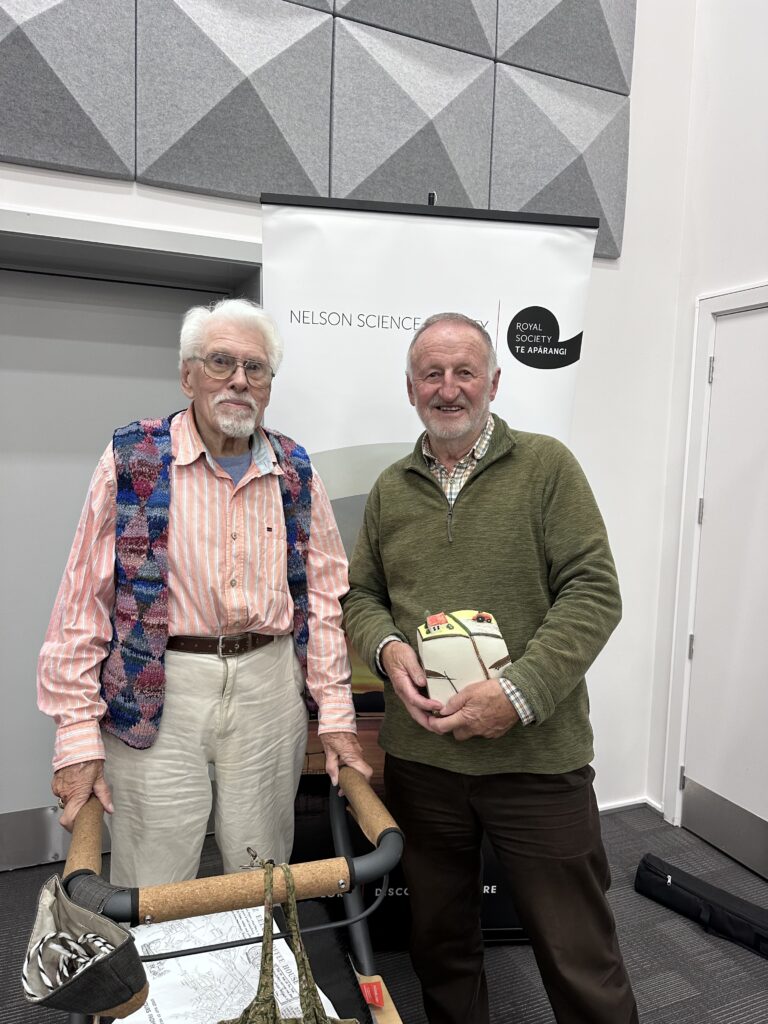
On Thursday, 30th April, Christopher Vine and Royce McGlashen gave a special presentation for the Nelson Science Society.
Christopher Vine spoke first, in a perfectly balanced presentation – the beautiful recounting of his own path to New Zealand and into Clay upon arriving here in the mid 1960s. A Cambridge educated architect, Mr Vine explained the unique relationship he had with the Craft movement which in some ways made famous by the great industrial idealist William Morris and which spread around the world in the 1950s and 60s, no place a better exponent of that movement he reckoned than Nelson in that time.
He recounted his experience with fellow potters, including the stalwarts of the craft and pioneer movement in Nelson ceramics in May & Harry Davis from Cornwall and Jack & Peggy Laird from London. Many of the famous and standout potters of the era in Nelson got their start with May & Harry or with Jack & Peggy. One of those starters at Waimea Pottery under Jack Laird of course was Royce McGlashen, the first Master Apprentice to blossom at Waimea Pottery.
Royce McGlashen spoke fondly of the same movement that had been waxed lyrical by Mr Vine, and we were graced with some early stories about encounters with Mirek Smíšek in Richmond when royce was as young as 10 or 12 years old. The story told of a first-hand experience of a firing by the Czech master and how Royce was encouraged to attend the unloading of the kiln with his father Muir McGlashen at 6am the next morning. Breaking down the bricks of the sealed kiln after a crash-cool, Royce recounted his captivation of the 400 degree centigrade pots being pulled out of Mirek Smíšek’s kiln and laid into straw and catching alight. It was an unforgettable early experience that helped build a passion in ceramics that would lead him to start his apprenticeship at Waimea Pottery only a few years later at 16, in 1966.
Royce McGlashen has a book about his life as a potter and in partnership with his wife Trudi McGlashen. It’s currently with the publisher and is on track for a September release: Royce, A Potters Life
Claybound in Tiapapata – Myriam Goos’ Samoa Residency
by Josh Jones
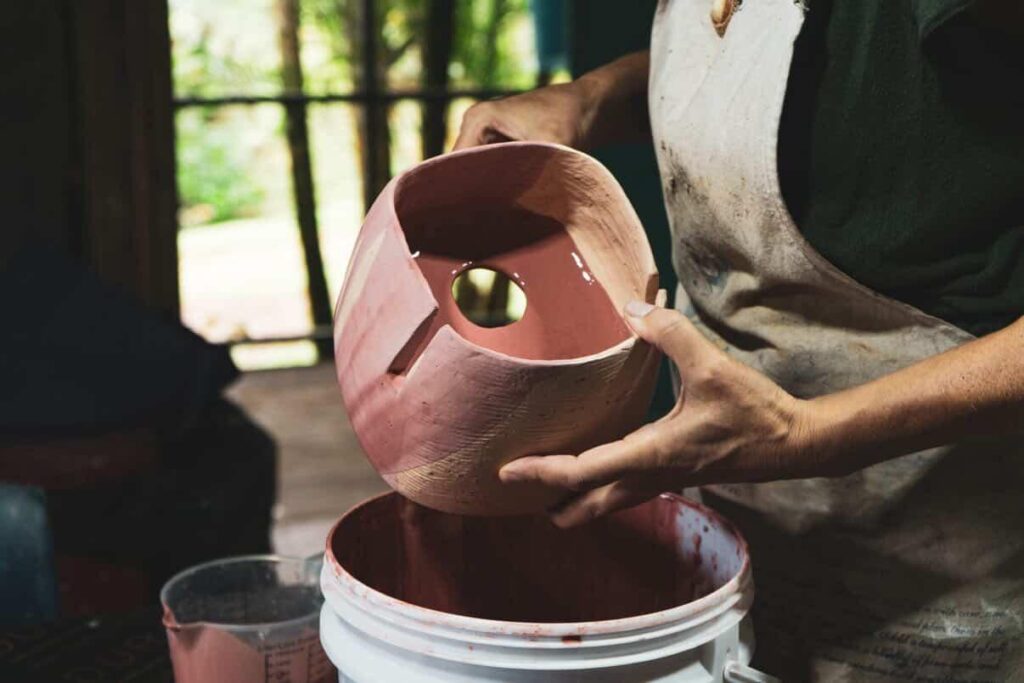
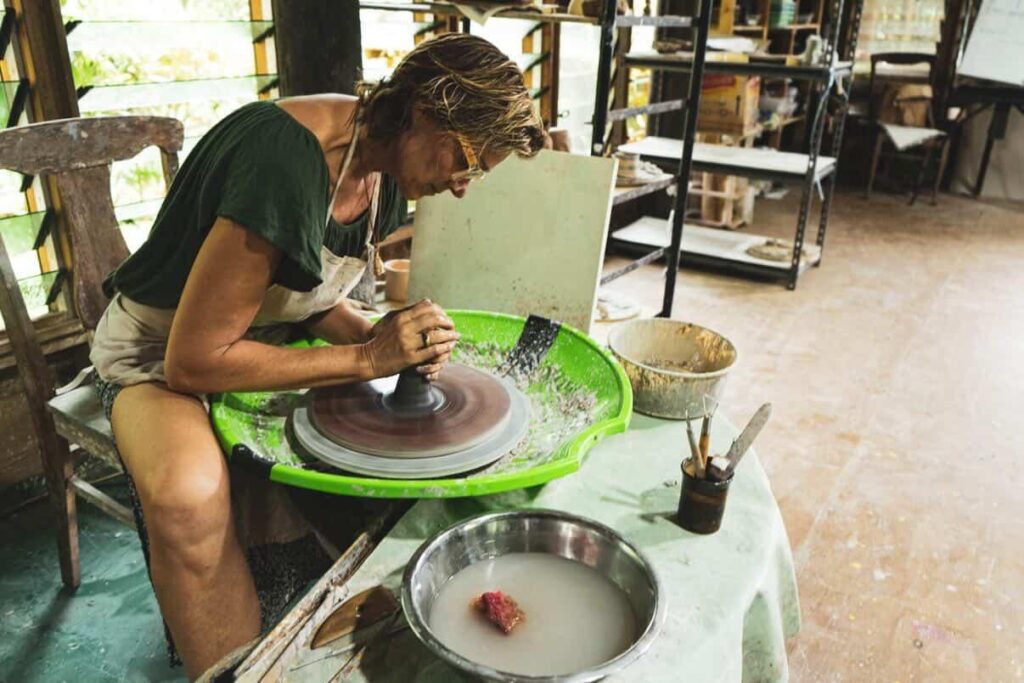
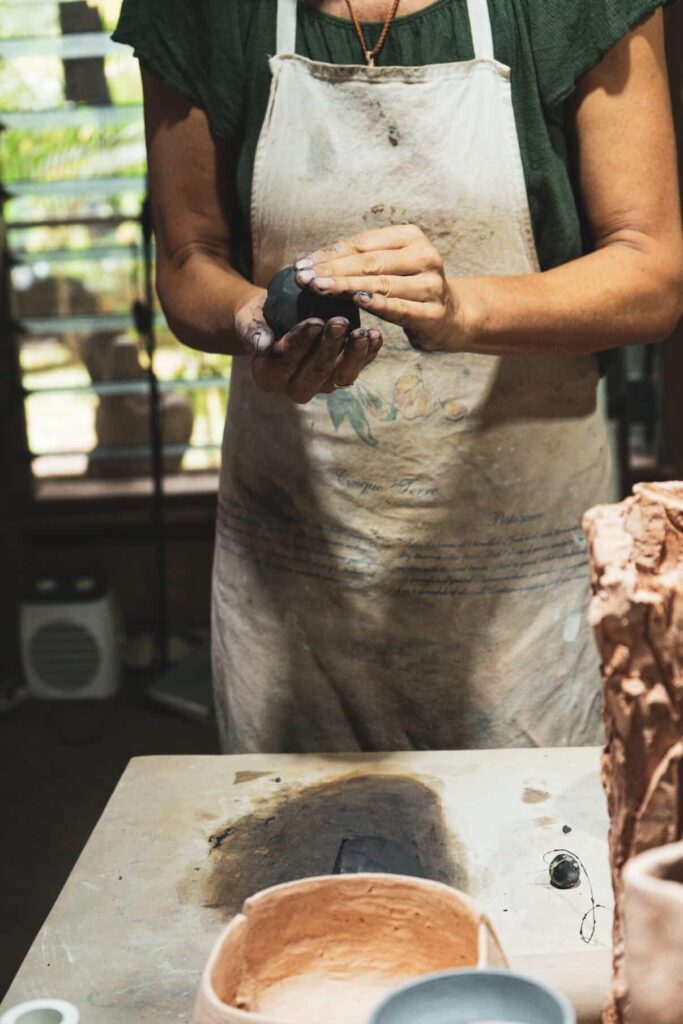
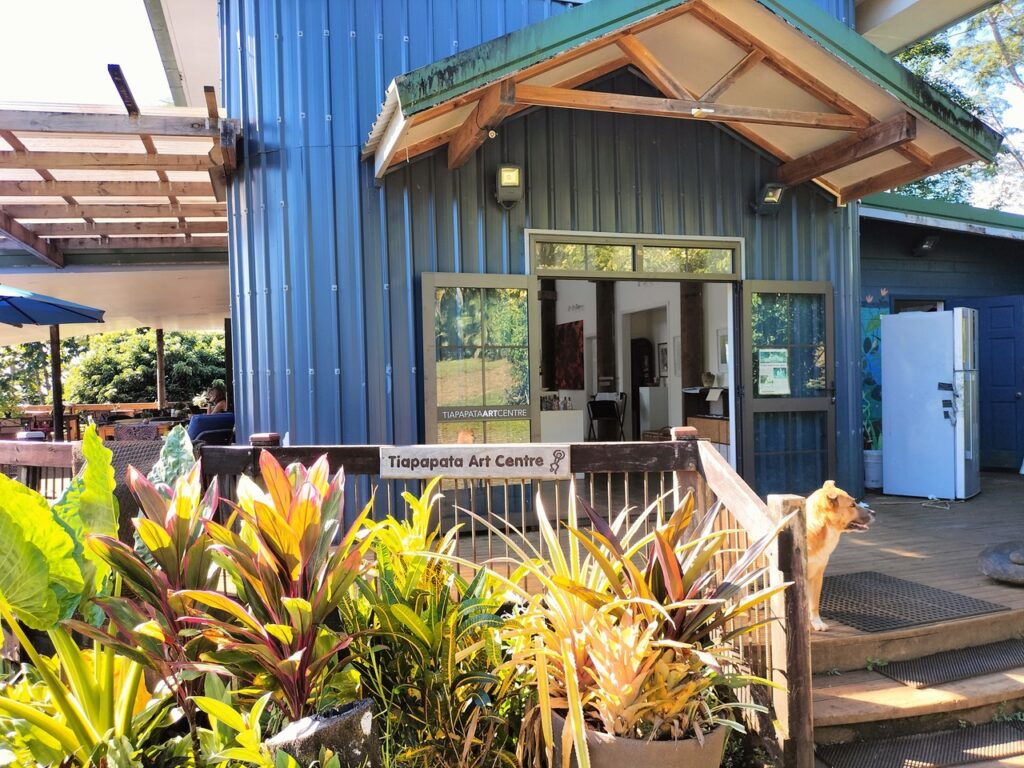
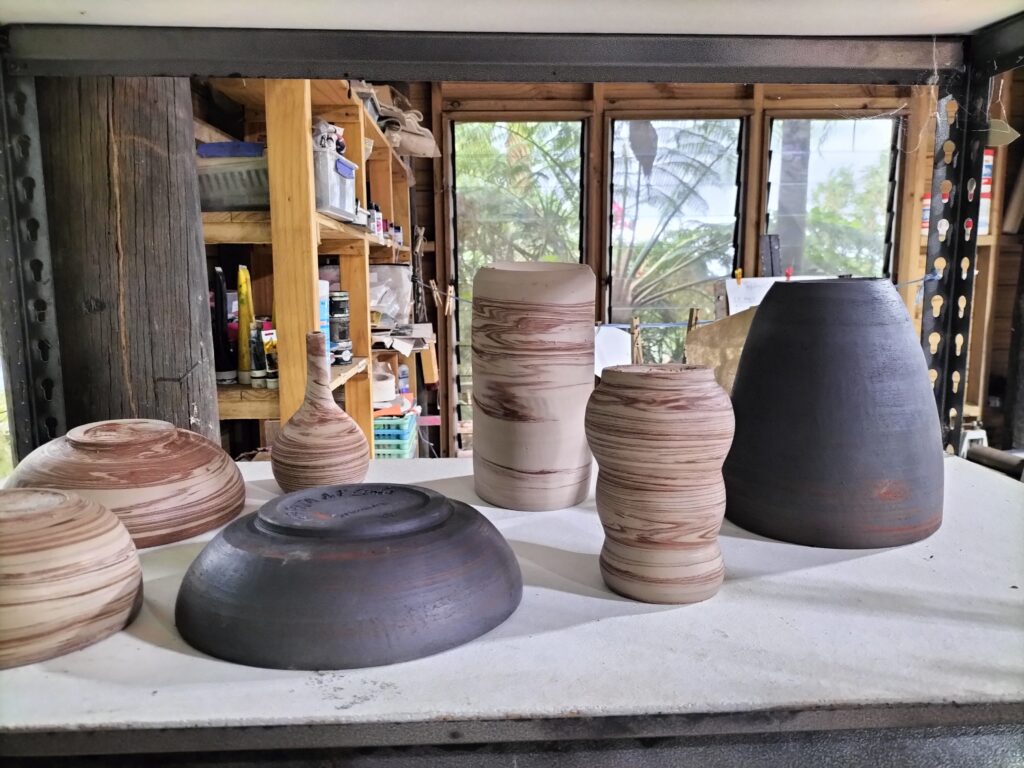
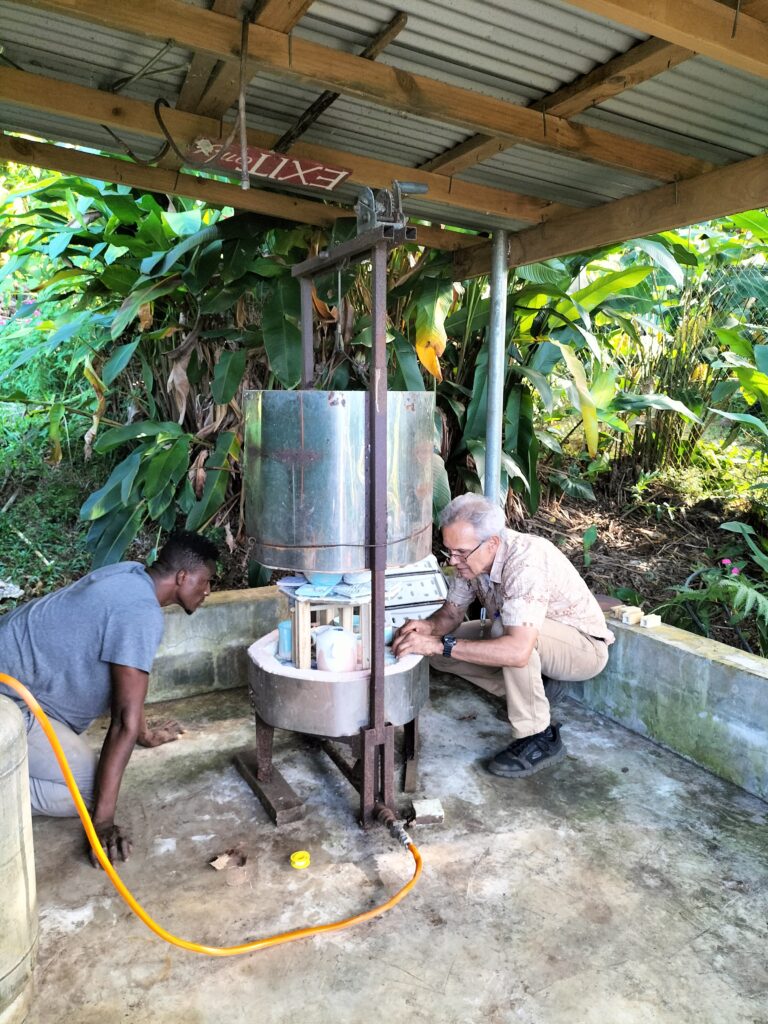
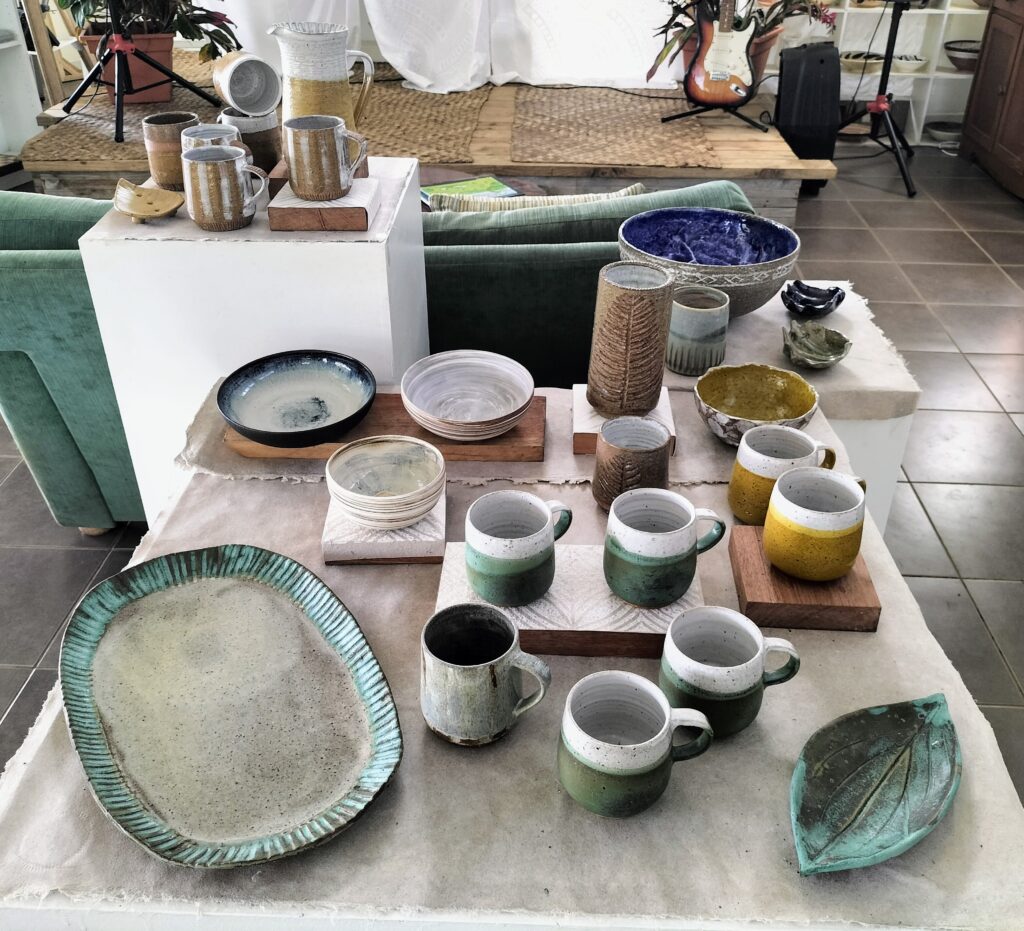
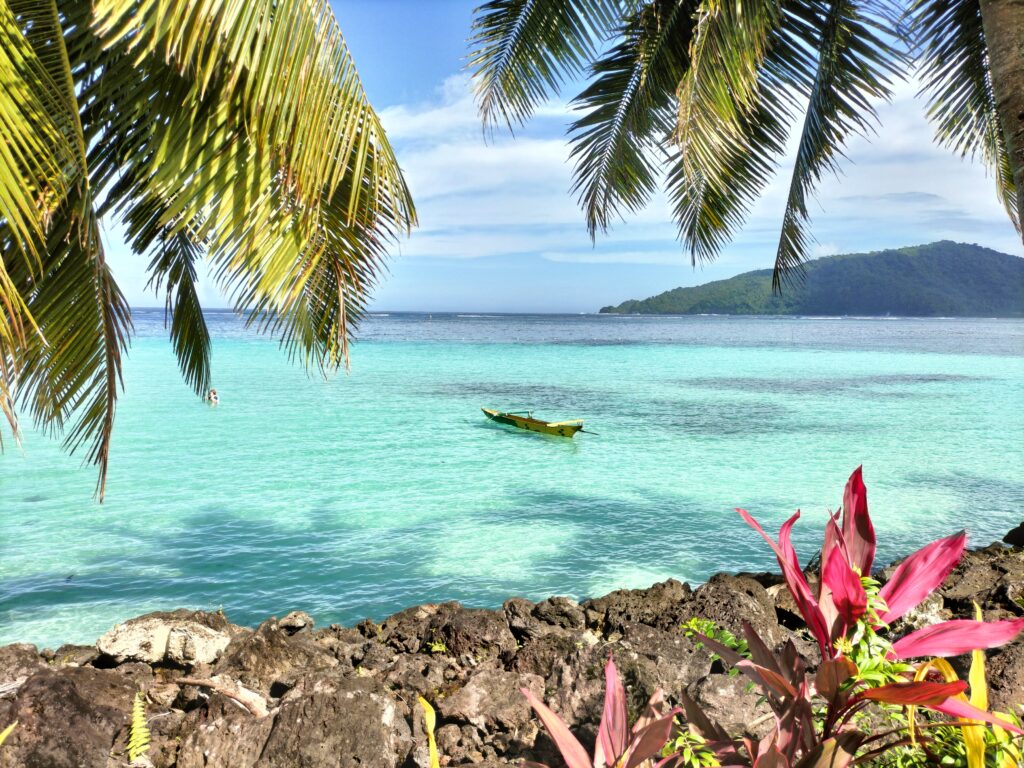
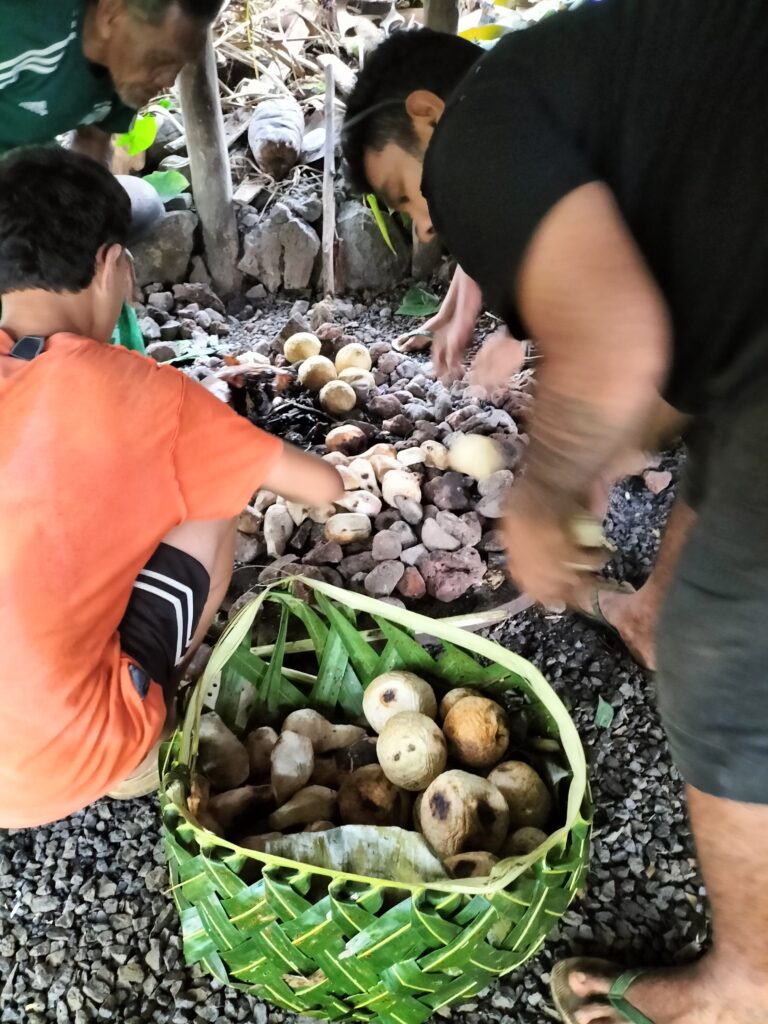
IIn 2024 Myriam Goos travelled to Samoa on holiday with her husband. As usual when she travels, Myriam sought out the local arts scene — curious as ever, and always open to inspiration.
On the main island, which you can drive around in half a day, there was only one significant draw for a tourist seeking a creative experience: Tiapapata Arts Centre.
Tucked away in the hills about 20 minutes from Apia, the capital of Samoa, Tiapapata is an oasis run by Wendy and Steve Percival. Now formed as a charitable trust, it is a place of genuine cultural significance with deep roots in the local community and Samoan legacy. Steve Percival is himself a high chief and well-connected local philanthropist. Together, he and Wendy have built a one-of-a-kind centre for the arts, complete with a café, gallery store, and shared workshop running hands-on arts and crafts programmes for locals and expats alike, across metal, wood, fibre, painting, and ceramics.
Myriam, the ever curious Tasman Bays local, struck up a conversation with Wendy during her visit. Wendy looked at Myriam’s website and work, and on the spot the two formed a “napkin-sketch” agreement: Myriam would return a year later and live on-site for three months as ceramics artist in residence. What began as a day visit became a three-month residency. It never hurts to talk and discover what’s possible.
One year later, winter arrived — perfect timing to escape the slower months of the Nelson crafts trade and settle into some clay in one of the most beautiful places on earth.
Staying in contact over the year, Myriam and Wendy arranged for materials to be shipped ahead of her arrival in 2025. Myriam requested her essentials: Mac’s Mud Buff Clay, Keane Black Clay, and her favourite Abbots Almond glaze. There was an element of the unknown — understanding what resources and materials would be available was largely a matter of seeing “what was on the shelf”. But that’s all part of it: stepping out of your comfort zone and embracing art with limitations but without boundaries.
Winter 2025 arrived, and apart from a minor interruption at Samoan Customs
Carrying various plastic bags of white powders procured from Steve at Nelson Pottery Supplies was, in hindsight, always going to raise an eyebrow
Myriam was through, delivered by car to her small standalone accommodation on the same grounds than the centre: a bamboo hut with a gorgeous balcony, her home for the next three months.
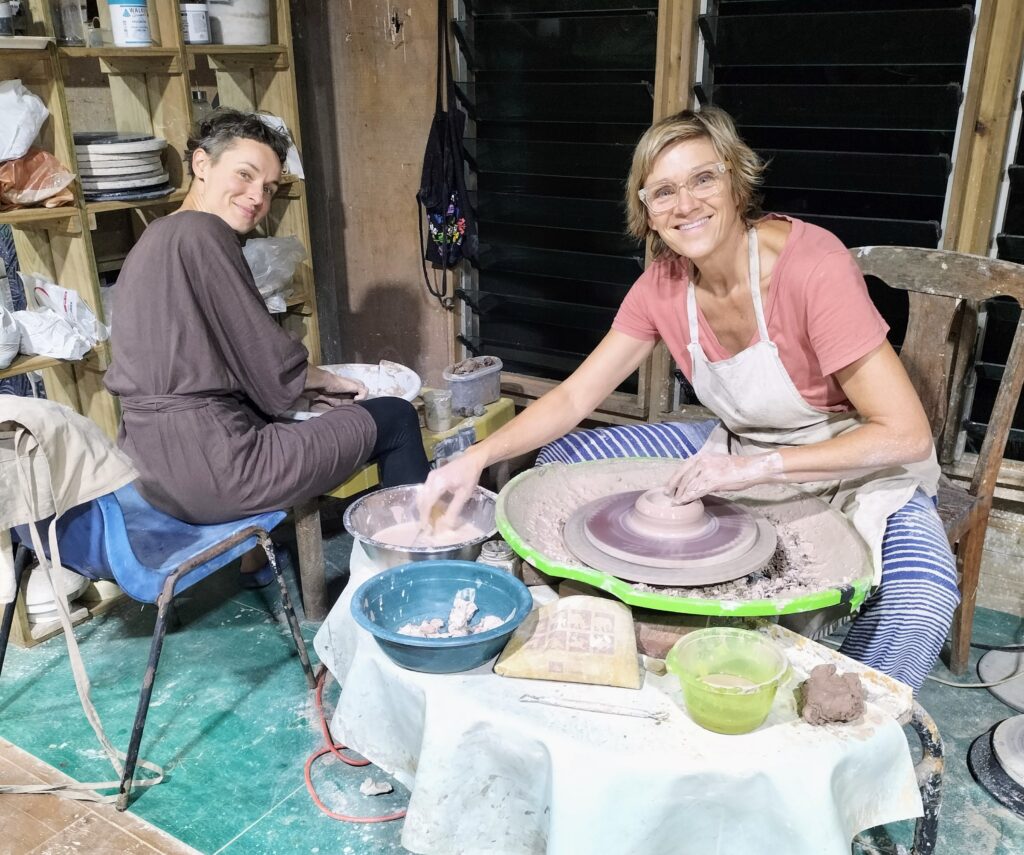
In exchange for free accommodation and access to the workshop, Myriam would deliver ceramics workshops, mostly handbuilding, with some wheel throwing, for locals and tourists once a week, and make wares for sale in the Tiapapata gallery shop.
Settling in
Myriam paints a vivid picture of her new surroundings. Next door, the Bahai Temple offers an unexpected ritual — she finds herself drifting in some Sunday mornings to listen to the choir.
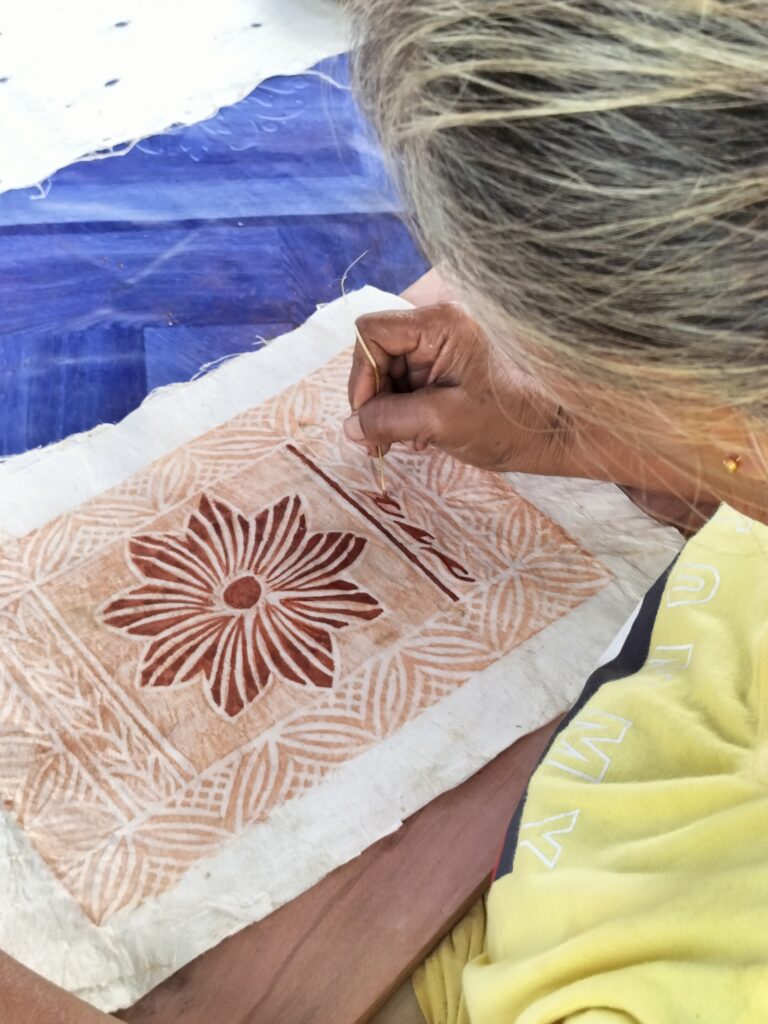
Tiapapata’s vegetarian café quickly became a firm favourite: taro and coconut cream, mountains of fresh seasonal vegetables, gluten-free cakes, and ice creams made in-house. The complex also houses its own papermaking studio — a remarkable thing to find in this corner of the world. Awal, a papermaker from Ghana, works there experimenting with an ever-expanding range of fibres — pineapple, bamboo, and beyond — alongside natural colorants, producing large sheets that function as artworks in their own right, as well as handmade books.
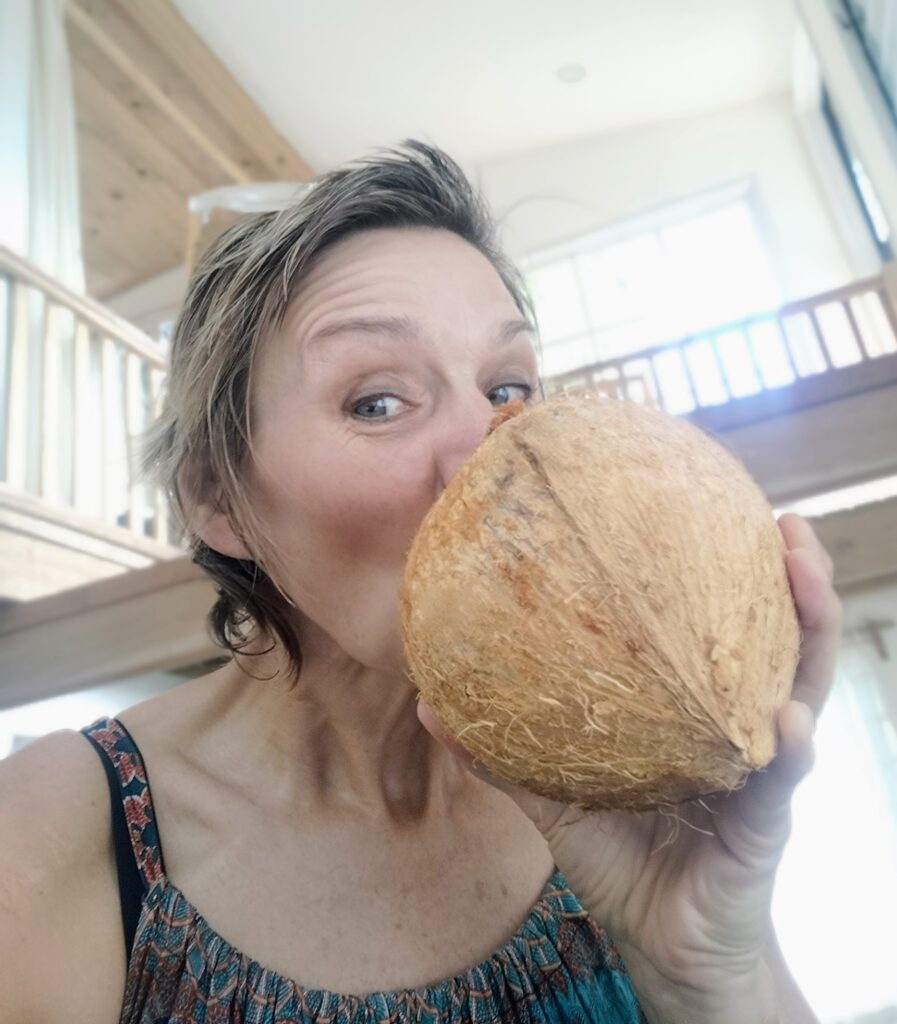
Each morning began on the balcony of her hut with cold coconut water and fresh slices of papaya — a simple pleasure that became the perfect entry point into the island’s unhurried rhythm.
Her arrangement with Wendy and Steve was easy and reciprocal. She had use of one of their cars for groceries and exploring the island, covering fuel as she went. And in true Samoan spirit, when there was something to be done — in the garden, the café, or even waiting tables for international guests at dinner — you pitch in and do your bit.
Tiapapata has its own unique ecosystem, and its dedication to traditional culture and the arts is a labour of love. Never-ending adaptation and flexibility are required — but with smiles and a warm vibe carrying you each day.
In the studio
Busy. Simply equipped. A shared space filled to the brim with potential, creativity, and good energy.
The heart of the Arts Centre is a large, open wooden building — part shared studio, part workshop space for kids and adults, part main working space for artists in residence. The dogs and cats, naturally, have also claimed it as their own.
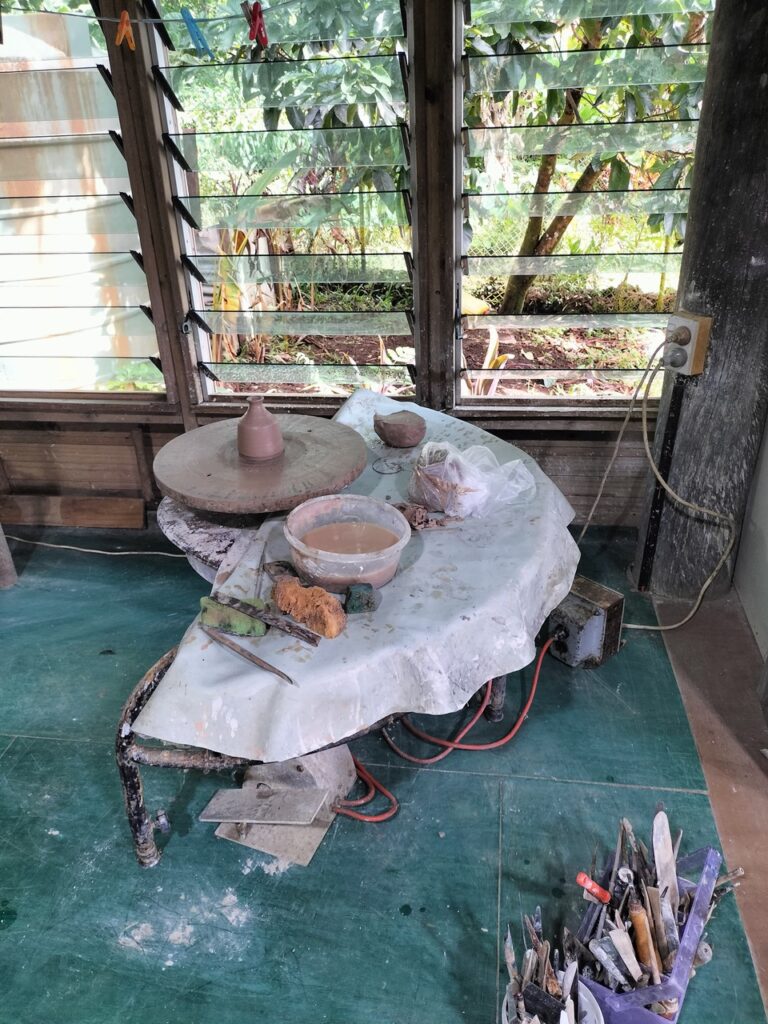
The ceramics space has everything you need to get to work: a workshop table, two throwing wheels, a decent front-loading kiln (around 12 cubic feet), a raku area with gas-fired chambers, and all the basics — sink, buckets, and raw materials for mixing glazes.
As with most centres like these, residencies run on energy and experience rather than rigid structure. There will be mozzies, spiders, a rotating cast of cats and dogs, and a rich soundtrack of natural and man-made noise. But as Myriam puts it, resourcefulness and a good attitude will take you far — whether that means fashioning a splash pan from a cut plastic bucket, or simply learning to love the wobble knocked into your clay by a dog chase that got a little too close to your drying shelf.
The people
The real highlights were in the people — getting to know and work alongside other artists in residence, across ceramics and other mediums. The teaching side of the residency proved equally rewarding: bringing knowledge to a place that genuinely wants to learn and discover is, as Myriam puts it, quite special.
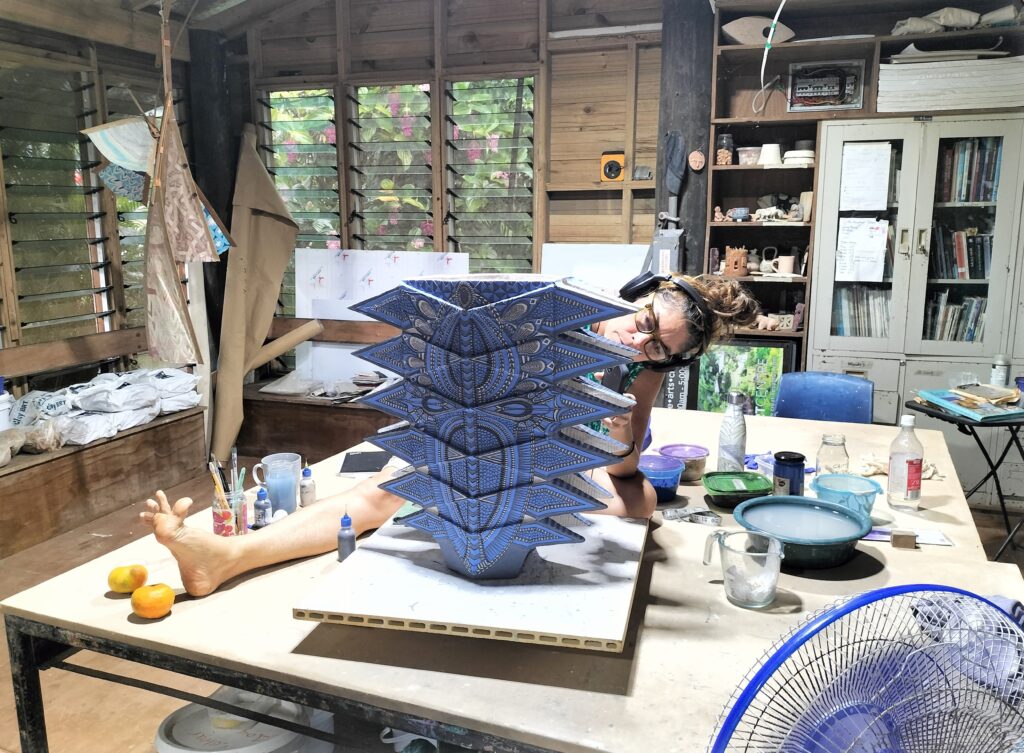
When Myriam arrived, Caitlin Maloney — a ceramicist from the Coromandel — was already in residence. Their four-week overlap became a real gift: sharing the space and having a fellow Kiwi alongside in an unfamiliar place made for a natural and easy acclimatisation. Their practices took quite different directions — Caitlin devoted her residency to a single large structural piece, while Myriam focused on functional wares for the gallery shop.
On the teaching side, Myriam had between seven and fourteen people every Saturday. As she describes it: “You are in charge of all of it — what to teach, how to teach, and across languages and skill sets.” She puts it simply:
“Teaching at Tiapapata is about sharing knowledge and preserving art and craft through communal experiences and engagement.”
Other highlights included meeting an Australian couple — she a potter who shared studio time with Myriam, he a woodcarver and metalworker — tasked with building a forge and blacksmithing area from recycled materials. Their arrangement mirrored Myriam’s own: time at the centre in exchange for the creation of the forge, and knowledge passed on to the woodworkers through classes on making their own turning and joinery tools.
Alongside teaching and making ceramics for the gallery, Myriam found time for a project of her own: a lamp series developed in collaboration with a French artist who happened to be the wife of the French Ambassador to Samoa. It’s the kind of connection that would be unlikely almost anywhere else.
It’s all things all at once, Myriam says — and that, it seems, is exactly the point.
Once you’re in the workshop at Tiapapata, you’re all in. It’s spontaneous, singular, and utterly unrepeatable. If it’s calling you, walk in feet first and roll with it — you won’t regret it.
Myriam is a ceramicist based in Tasman Bays, top of the South, and makes mostly thrown functional ware. Share teaches wheel throwing and is an active part of the local ceramics scene in Nelson-Tasman.
Find out more about Myriam and her work here:
Update from behind the scenes at Potters Clay/Macs’ Mud

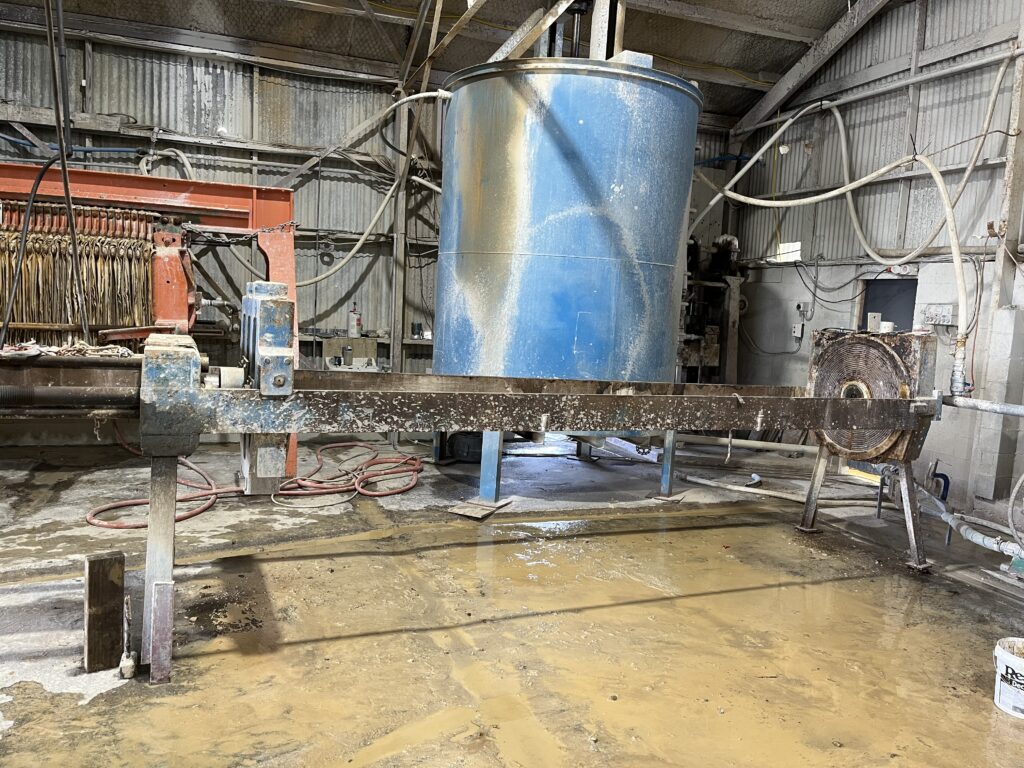
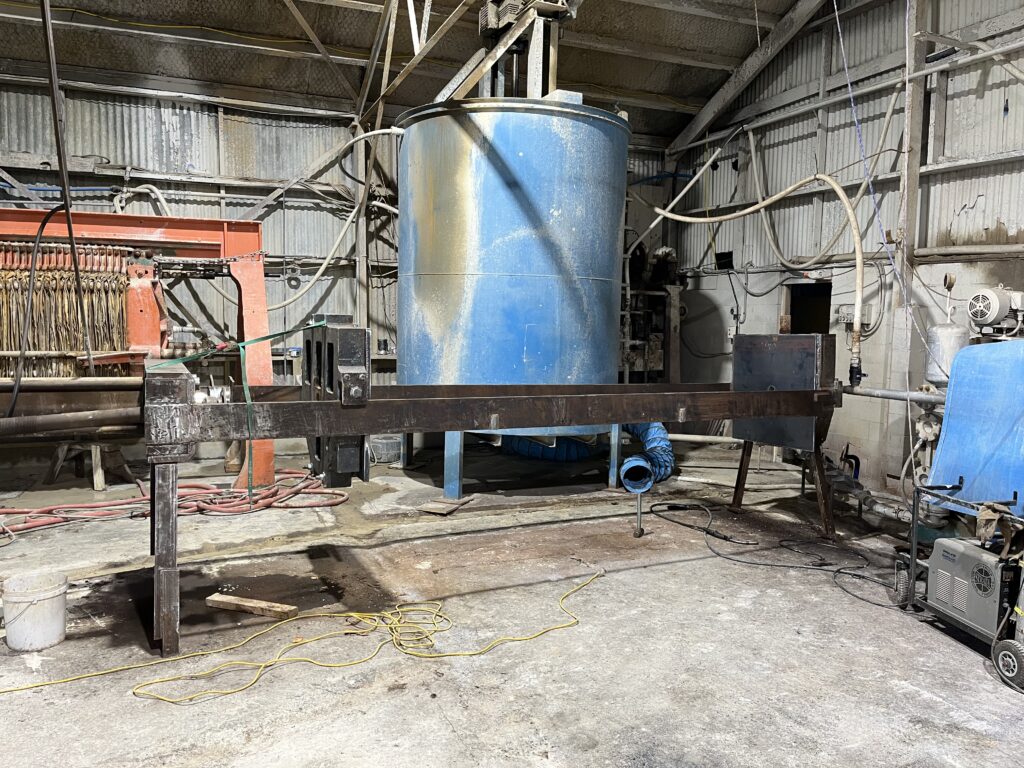
Behind the scenes at Potters Clay, it’s been a busy start to the year on the factory floor!
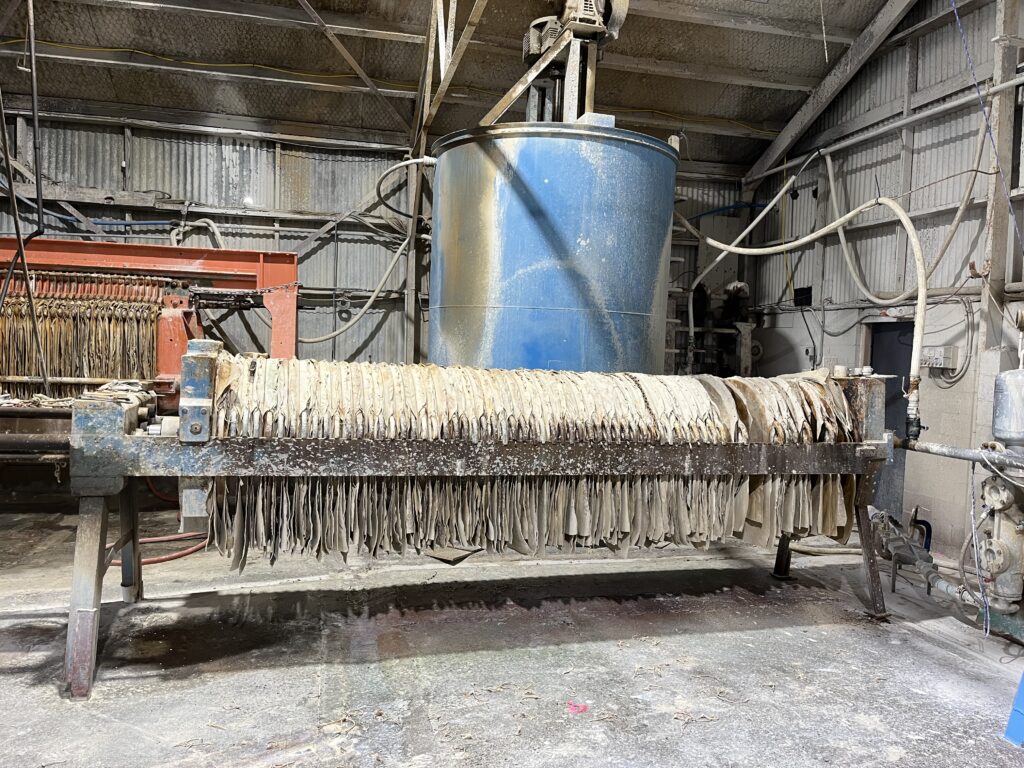
Increasing demand has forced us to update one of our long-standing filter presses (over 50 years old) which we have dismantled after the plates finally reached the end of their life! It’s no small job, but we’re currently in the process of revamping the entire press – removing the worn cast iron plates, fitting it out with brand new plates and getting everything back running smoothly again. We’re looking forward to having it back in action soon ready for the next few decades of making clay!
Having 3 working presses allows us to move between clays efficiently and the additional lines will also allow us to expand our product range so keep an eye out as these will be coming to market over the coming months.
Updates from Nelson Pottery Supplies

www.nelsonpotterysupplies.co.nz
- Fresh stock of Walkers White Earthenware Paper Clay
- Re-stock of nickel oxide
- Keanes Midfire Black Paper Clay in stock now
Update from Nelson Clay Week HQ

- Programme goes live 11th May
- Applications for Push Clay & Potters’ Market open 11th May
- Tickets go live 10am sharp on 18th May